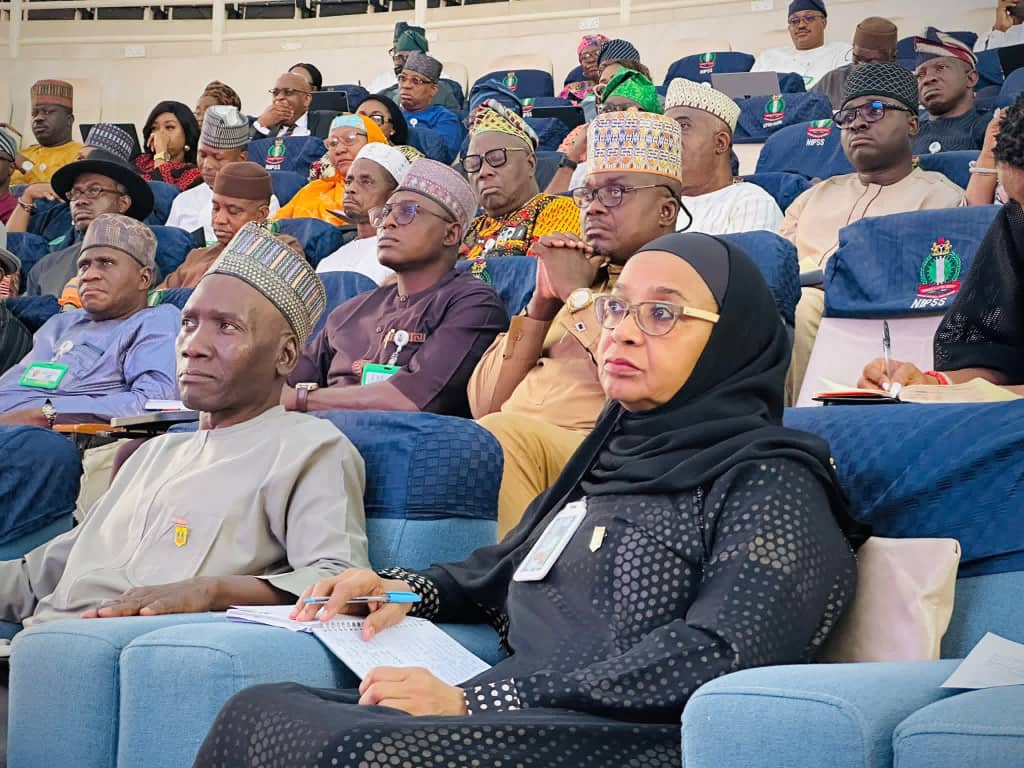
The National Institute for Policy and Strategic Studies (NIPSS), Kuru, on Friday, 6 March 2026, convened a high-level brainstorming session to examine the implications of the emerging conflict between the United States and Iran for Nigeria’s national security, economy and foreign policy.
The policy dialogue, organised by the Institute’s Directorate of Research, brought together scholars, diplomats, security experts and participants of Senior Executive Course 48 to analyse the potential consequences of the crisis for Nigeria.
Delivering the lead presentation, defence and security expert Professor Leonard Fwa provided an overview of the geopolitical dynamics surrounding the US–Iran tensions and their potential global ramifications. He noted that conflicts involving major powers often generate ripple effects across global security systems, energy markets and international trade.
Panellists examined the crisis from economic, security, diplomatic and intelligence perspectives. Dr Solomon Gushibet analysed the potential economic impact on Nigeria, warning that escalation of the conflict could trigger volatility in global oil prices, disrupt trade flows and intensify inflationary pressures within the Nigerian economy. He also noted that the crisis could present Nigeria with an opportunity to fill emerging supply gaps in the global oil market, thereby enhancing the country’s foreign exchange earnings. However, he cautioned that Nigeria must strategically utilise any expected windfall to stabilise the economy and strengthen critical sectors rather than allow it to dissipate through short-term fiscal spending.
From the security perspective, Colonel Sherif Fagbemi highlighted emerging strategic risks, warning that the conflict could spill over into the Sahel region with significant implications for Nigeria’s security environment. He noted that such developments would be particularly concerning in light of the recent categorisation of Nigeria as a Country of Particular Concern, stressing the need for heightened vigilance, strengthened regional cooperation and proactive national security planning.
Ambassador Badewole Adebowale explored the diplomatic dimension of the conflict, noting that the evolving tensions could reshape global power alignments and require careful navigation by countries such as Nigeria.
Speaking on intelligence coordination, Chikezie Ezema emphasised the importance of strengthening information gathering and strategic foresight, observing that timely intelligence remains critical to national preparedness in periods of geopolitical uncertainty.
The session also featured virtual contributions from online participants, making the engagement a hybrid platform for broader intellectual exchange.
Participants of Senior Executive Course 48 and members of directing staff raised probing questions during the interactive discussion, generating robust debate and policy reflections on how Nigeria can anticipate and manage the potential consequences of global conflicts.
The session concluded with remarks from the Director-General of NIPSS, Professor Ayo Omotayo, who was represented by the Acting Director of Studies, Barrister Nima Salman Mann, mni, and the Acting Director of Research, Professor Musa Umar, mni.
The dialogue underscored the urgency for Nigeria to adopt a proactive and strategic posture in responding to emerging global conflicts, strengthening economic resilience, security preparedness and diplomatic engagement to safeguard national interests in an increasingly volatile international environment. It also reaffirmed NIPSS’s role as Nigeria’s foremost policy think tank, providing strategic insights to support informed national policy decisions.